
Yapay zekâ çağında insan muhakemesi ve Konfigürasyon Açığı üzerine
Yapay zekâ diye bir şey yok.
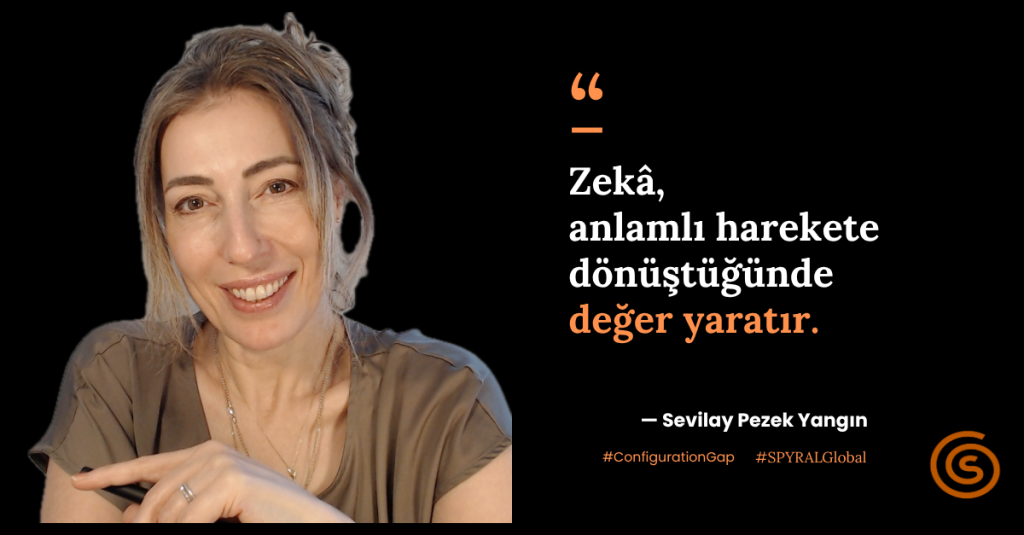
Yapan zekâ ve yapamayan zekâ var.
Organizasyonlarda sürdürülebilir bir gelişim hedefliyorsak, artık zekânın yapay mı gerçek mi olduğuna takılmak yerine şu soruyu sormamız gerektiğini düşünüyorum:
Zekâ doğru şekilde akıyor mu?
İhtiyaç duyulan zekânın sistemde var olduğunu varsayarsak, bu zekâ doğru işin doğru şekilde ve doğru zamanda yapılmasını sağlayabiliyor mu?
Bir organizasyonda bir sorun olabilir ama sistem ve kültür bazen o sorunun dile getirilmesine, hatta görülmesine bile izin vermeyebilir. İnsanlar konuşur ama söyledikleri duyulmaz; duyulsa bile konu sahiplenilmez. Bazen karar bir türlü alınamaz, bazen de konu bir departmandan diğerine, bir kişiden diğerine adeta bir top gibi atılır.
Ortada gerçek bir sahiplik ve hesap verebilirlik olmayınca karar eyleme dönüşmez; eylem olsa bile her zaman sonuç ya da öğrenme üretmez.
Ben kendimi çoğu zaman gören, duyan ve eyleme geçen tarafta buldum. Yıllar önce işyerinden bir arkadaşım masama koymam için bana porselen üç maymun biblosu hediye etmişti. Biri gözünü, biri kulağını, diğeri de ağzını kapatıyordu.
Bana şakayla karışık şöyle tembihlemişti:
“Kurumsal hayatta başarılı olmak istiyorsan, ‘Görmedim. Duymadım. Bilmiyorum.’ demeyi öğrenmelisin.”
İşin ironik tarafı, üç maymunla ilişkilendirilen geleneksel ahlaki anlamın bunun neredeyse tam tersi olmasıdır. Metafor, kötülüğe bakmamak, kötülüğü dinlememek ve kötü söz söylememek gibi ahlaki bir öğütle ilişkilendiriliyor. Bugün ise çoğu zaman bildiği hâlde görmezden gelmek, duymazdan gelmek ve sessiz kalmak anlamında kullanılıyor.
Organizasyonlarda beni ilgilendiren de bu ikinci anlam. Çünkü insanlar gördüklerini söylememeyi, duyduklarına tepki vermemeyi ya da bildikleri bir konuda sorumluluk almamayı öğreniyorsa, sistemde zekâ vardır ama katkıya dönüşemiyordur.
Ben bu metaforu kendime göre biraz değiştirdim. Ekibime ve koçluk verdiğim liderlere sık sık şunu söylerdim:
Duyduklarınıza inanmayın.
Gördüklerinizin yarısına inanın.
Ve her zaman sorgulayın.
Şimdi yapay zekâdan sonra buna bir cümle daha ekledim:
Artık gördüklerinize de hiç inanmayın. 😄
Bugün yapay zekâyla neredeyse her şey üretilebiliyor. İnsanın bilişsel kapasitesi ve organizasyonların operasyonel sistemleri, üretilenleri aynı hızda sindirmeye ve gerçekten gerekli olanı gereksizden ayırmaya her zaman yetmiyor.
Anlaşılmayan e-postalar yazılıyor, okunmayan raporlar hazırlanıyor, gerekli uzmanlık yeterince devreye girmeden sayfalarca analiz yapılıyor. Asıl mesele bunların üretilmiş olması değil; dolaşıma girmeleri. Kararlara karışıyor, insanların dikkatini tüketiyor, bazen eyleme dönüşüyor, bazen de hiçbir şeye dönüşmeden sistemin içinde dolaşıp duruyorlar.
Ben endüstri mühendisiyim. Yıllarca bulunduğum sistemlerde girdileri ve kaynakları optimize etmek, doğru işi en doğru biçimde yapabilecek sürdürülebilir sistemler kurmak için çalıştım ve çalışmaya devam ediyorum.
Ancak son birkaç yıldır odağımı giderek daha fazla zekâya ve onun sistem içinde neye dönüştüğüne çevirdim. Kendime ve birlikte çalıştığım insanlara şu soruları sordum: Zekâ nerede? Nereye, nasıl ve ne için akması gerekiyor? Önündeki engeller neler? Nasıl destekleyebiliriz, nasıl geliştirebiliriz?
Ve şimdi bir soru daha soruyorum.
Zekâ tek başına yeterli olur mu?
Bugün hem insanlarda hem de makinelerde daha fazla kapasiteye erişiyoruz. Bu çok büyük bir olanak, fakat tam da bu yüzden bazı soruları sormamız gerekiyor.
Daha fazla çıktı, daha fazla zekâ anlamına mı geliyor? Daha fazla kapasite her zaman daha doğru ve daha iyi karar anlamına gelir mi?
Üretim kapasitemiz hızla artarken insanın dikkati, zamanı ve karar verme kapasitesi aynı hızda artmıyor. Dolayısıyla bugün benim “yapay zekâ enflasyonu” dediğim, yönetilmesi zor bir çıktı bolluğu oluşuyor.
Bu bolluk, şirket için gerçekten kritik olan sinyallerin, bilgilerin ve sorunların üretilen gürültünün içinde kaybolma riskini de artırıyor. Yapay zekânın daha fazla seçenek sunması ya da insanların daha fazla içerik üretmesi kendi başına olumsuz bir şey değil; ancak sistemin neyin gerçekten önemli olduğunu ayırt etme kapasitesinin de aynı anda gelişmesi gerekiyor.
Çünkü organizasyonların ihtiyacı daha fazla meşguliyet değil.
Daha akıllı iş yapan insanlar ve daha akıllı işleyen sistemler.
Konfigürasyon Açığı
Ben bu farkı konfigürasyon açığı olarak adlandırıyorum.
Konfigürasyon açığı, bir sistemde mevcut olan zekâ ile o zekânın anlamlı katkıya, karara, sahipliğe, eyleme ve öğrenmeye fiilen dönüşmesi arasındaki farktır.
Bugün giderek daha fazla yapay zekâ çıktısı sisteme giriyor, ama o çıktıyı gerçekten değerlendirecek muhakeme aynı ölçüde devreye girmeyebiliyor.
Bu yüzden benim için asıl ayrım insan zekâsı ve makine zekâsı arasında değil, Yapan Zekâ ile Yapamayan Zekâ arasında.
Yapan zekâ, doğru konfigürasyonda anlamlı ve sorumlu bir harekete dönüşebilen zekâdır. Bu insan zekâsı, makine zekâsı ya da kolektif zekâ olabilir; hatta bunların birlikte oluşturduğu sistemin zekâsı olabilir.
Yapamayan zekâ, yetersiz zekâ değildir. Sahip olduğu kapasiteye rağmen sistem içinde akamayan, katkıya dönüşemeyen veya yanlış yöne akan zekâdır.
Bunu görebilecek ve gerektiğinde yönünü düzeltebilecek kontrol noktalarına da ihtiyacımız var. Bütün bunlar bireyin sorumluluğunu ortadan kaldırmaz; yalnızca başka bir ihtimali de aklımızda tutmamızı gerektirir:
Bazen problem insan değildir. Yapay zekâ da değildir. Problem sistemdedir.
Peki, yapay zekâ yanıt üretebiliyorsa insan muhakemesine neden hâlâ ihtiyacımız var?
İyi görünen bir çıktı her zaman iyi bir muhakemenin kanıtı değildir. Bir insanın süreçte bulunması, onun gerçekten düşündüğü, değerlendirdiği ve gözetim yaptığı anlamına gelmeyebilir.
Aslında bunu hepimiz başka alanlardan biliyoruz. Bir yazılım yüklerken ya da bir sözleşmeye girerken önümüze sayfalarca koşul çıkar. Çoğu zaman “Okudum ve kabul ediyorum” kutusunu işaretleyip okumadan geçiyoruz.
İnsan döngünün içinde midir? Evet.
Gerçekten muhakeme yapmış mıdır? Her zaman değil.
Yapay zekâyla çalışan sistemlerde de benzer bir risk var. Bir insan önüne gelen çok iyi hazırlanmış görünen bir raporu onaylayabilir. Sistem daha önce defalarca doğru sonuç vermiş olabilir; vakti azdır, rapor uzundur ve bilişsel olarak “zaten iyi görünüyor” deyip geçmek, gerçekten sorgulamaktan çok daha kolaydır.
İnsan döngünün içinde olabilir. Ama muhakeme döngünün içinde olmayabilir.
Üretken yapay zekâ, deterministik bir hesap makinesi gibi aynı girdiye her koşulda sabit bir işlem uygulayan bir sistem değildir. Olasılıksal çıktılar üretir ve iç işleyişinin tamamı kullanıcı açısından şeffaf değildir. Dolayısıyla son derece ikna edici görünen bir sonuç yanlış da olabilir.
Doğrulama sorumluluğumuz bu nedenle azalmaz; aksine daha da kritik hâle gelir.
Üstelik insan ile yapay zekâyı yan yana koymak da otomatik olarak daha iyi bir sistem yaratmıyor.
Yakın zamanda edX üzerinden University of Cambridge’in Introduction to Cognitive Psychology and Neuropsychology kursunu tamamladım ve bu konuda araştırmaya ve çalışmaya devam ediyorum.
Son dönemde özellikle iki yayın dikkatimi çekti.
Birincisi, 2024’te yayımlanan ve 106 deneysel çalışmadan 370 etki büyüklüğünü inceleyen sistematik derleme ve meta-analiz. İncelenen görevlerde insan+yapay zekâ kombinasyonları, tek başına daha iyi performans gösteren insan ya da yapay zekâ sistemlerine kıyasla ortalamada daha düşük performans gösterdi. Performans kayıpları özellikle karar görevlerinde görülürken, içerik üretimi görevlerinde sonuçlar daha olumlu yöndeydi; ancak bu görevlerdeki ortalama sinerji istatistiksel olarak sıfırdan anlamlı biçimde farklı değildi.
Bu bulgu benim için başka soruları güçlendiriyor: İnsan gerçekten değerlendirebiliyor mu? Gerekli bilgiye sahip mi? Düşünmek için zamanı ve bilişsel alanı var mı? Karar yetkisi var mı? Yanlış bir şey gördüğünde itiraz edebilecek psikolojik güvenliğe sahip mi? Ve gerçekten sistemi durdurabilecek ya da yönünü değiştirebilecek gücü var mı?
2026’da tıbbi yapay zekâ bağlamında yayımlanan bir npj Digital Medicine yorum yazısı da anlamlı insan gözetimi için dört birbirine bağlı koşul öneriyor:
- Bilgiyi değerlendirme yeterliliği
- Bilişsel alan
- Karar yetkisi
- Etkili müdahale kapasitesi
Bu çerçeve tıbbi yapay zekâ bağlamında önerilmiş olsa da, insanın yalnızca döngü içinde bulunmasıyla gerçekten anlamlı ve koruyucu bir gözetim sağlayabilmesi arasındaki farkı düşünmek açısından değerli.
İnsan yalnızca orada bulunuyor ama bu koşullara sahip değilse gözetim koruyucu olmaktan çıkıp prosedürel hâle gelebiliyor.
Dolayısıyla yapay zekâ bazı işleri devraldıkça insanın katkısı daha az üretmekten, daha fazla ayırt etmek, sorgulamak, anlamlandırmak, bağlamı görmek, gerektiğinde durdurmak ve sorumluluk almak yönüne kayabilir.
İnsanın rolü değişiyor
Sanayi çağında birçok iş rolü makineyi kullanmak ve işletmek etrafında şekilleniyordu. Bugün yapay zekâyı konuşurken kullandığımız dilde hâlâ aynı araç metaforunu görüyorum: yapay zekâyı kullanmayı öğrenmek, doğru prompt yazmak, yeni araçlara hâkim olmak.
Bunları bilmek elbette önemli ve değerli. Ama bunun gelecekte yeterli olacağını düşünmüyorum.
Çalışma ortamı giderek “bir insan + bir araç” ilişkisinden çıkıyor. İnsanlar yapay zekâ sistemleriyle, ajanlarla, farklı insanlarla ve organizasyonun bilgi sistemleriyle birlikte çalışacak.
Dolayısıyla ihtiyaç duyduğumuz şey yalnızca araç kullanma becerisi değil, bir ortaklık geliştirme becerisi olacak.
Bağlam nedir? Yetki nedir? Sınırlar nerede? Ne devredilebilir, ne devredilemez? Kontrol noktaları nerede? Ne zaman güveneceğiz, ne zaman sorgulayacağız, ne zaman durduracağız?
Benim gördüğüm ama yapay zekânın görmediği bağlamı sisteme nasıl taşıyacağım? Yapay zekânın gördüğü ama benim görmediğim şeyi hangi protokollerle değerlendireceğiz? Birlikte ürettiğimiz kararın sorumluluğunu kim taşıyacak?
İnsanların önümüzdeki dönemde geliştirmesi gereken en kritik kapasitelerden biri belki de şu olacak:
Başka bir zekâyla birlikte çalışırken kendi muhakememizi nasıl koruyacağız ve nasıl yöneteceğiz?
İnsan Kaynakları Profesyonellerinin rolü de değişiyor
Tam da burada insan kaynakları profesyonelleri için önemli bir fırsat görüyorum.
İnsan ve yapay zekâ çalışma sistemlerinin mimarisinde insan kaynakları profesyonellerinin iş liderleri, teknoloji, risk, güvenlik ve hukuk fonksiyonlarıyla birlikte önemli bir tasarım rolü üstlenebileceğini düşünüyorum.
Mesele artık yalnızca çalışanların yapay zekâ araçlarını kullanabilmesi değil. Az önce sözünü ettiğim ortaklık sistemini kurmak ve zekânın organizasyon içinde doğru biçimde kullanılabileceği koşulları tasarlamak da işin bir parçası.
Belki insan kaynakları profesyonellerinin giderek daha önemli rollerinden biri zekâ akışını tasarlamak olacak.
İnsan zekâsının, kolektif zekânın ve makine zekâsının nerede, nasıl ve hangi koşullarda birbirini tamamlayabileceğini düşünmek; insanları makine operatörlerine dönüştürmek yerine, farklı zekâların verimli ve sorumlu biçimde birlikte çalışabileceği sistemleri tasarlamak.
Kaynak neden hâlâ önemli?
Yıllardır çeşitlilik ve kapsayıcılık alanında çalışırken beni en çok ilgilendiren konulardan biri şuydu:
Bir fikrin değeri onu söyleyen kişinin statüsüne göre değişmemeli.
Bir fikrin Genel Müdür’den gelmesi onu otomatik olarak doğru veya değerli yapmaz. Yeni başlayan bir çalışan, sahada çalışan biri ya da organizasyonun merkezinde görülmeyen bir kişi de sistemin gözden kaçırdığı önemli bir şeyi fark edebilir.
Ama bu, kaynağın önemsiz olduğu anlamına gelmez.
Statü başka bir şey. Kaynak başka bir şey.
Kaynağı bilmek, bilginin uzmanlığını, güvenilirliğini, bağlamını ve nasıl valide edileceğini değerlendirmek için önemlidir.
Yapay zekâ çağında bu ayrım daha da önemli. Artık yalnızca “Bu içeriği kim üretti?” sorusunu değil, “Bu sonuçta kimin muhakemesi vardı?” sorusunu da sormamız gerekiyor.
Sorumluluk çıktının sonunda atılan bir imza olmamalı.
Muhakemenin içinde bulunmalı.
Çeşitlilik varsa ama zekâ akamıyorsa?
Çeşitlilik tek başına kolektif zekâ değildir.
Farklı insanların bir arada olması değerlidir; ancak bunun kolektif zekâya dönüşebilmesi için insanların görebilmesi, söyleyebilmesi, duyulabilmesi, birbirinden öğrenebilmesi ve katkılarının sistem içinde etkili olabilmesi gerekir.
Bu noktada psikolojik güvenlik, çalışanın sesi, organizasyonel öğrenme, karar alma hakları ve koordinasyon birbirine bağlanıyor.
Benim Konfigürasyon Açığı diye düşündüğüm şey de bu ilişkilerin sistem içinde nasıl işlediğine bakıyor.
Ve konu yine liderliğe geliyor
Liderlik zaten sürekli değişiyordu. Yapay zekâ çağında kapsamı daha da genişliyor.
Bence liderin işi artık her cevabı bilmek değil; hangi zekânın nerede işe yarayabileceğini görmek ve onun doğru biçimde kullanılabileceği koşulları yaratmak.
Ben yapay zekâdan kaygı duymuyorum.
Benim kaygım, yapay zekâyla çalışmayı öğrenirken soru sormayı, doğrulamayı, kendi düşüncemizi üretmeyi ve verdiğimiz kararların sorumluluğunu taşımayı unutan bir insan sistemi.
Çünkü tek başına yapmak yeterli değil. Zekânın var olması da yetmiyor.
Nereye gidiyor? Nasıl kullanılıyor? Neye dönüşüyor?
Sonuca ulaşmak ve ulaşılan sonuç da önemli.
Belki asıl soru budur:
Elimizdeki bütün bu zekâyı, insan, yapay ve kolektif zekâyı, nasıl doğru biçimde birbirine bağlayacağız?
Çünkü mesele artık ne kadar zekâmız olduğu değil.
Onu neye dönüştürebildiğimiz.
Referanslar
Vaccaro, M., Almaatouq, A., & Malone, T. W. (2024). When combinations of humans and AI are useful: A systematic review and meta-analysis. Nature Human Behaviour, 8, 2293–2303.
https://doi.org/10.1038/s41562-024-02024-1
van de Sande, D., Economou-Zavlanos, N., & van Genderen, M. E. (2026). Meaningful oversight of medical AI beyond human in the loop. npj Digital Medicine, 9, Article 569.
https://doi.org/10.1038/s41746-026-02971-1
Intelligence in Movement, Intelligence Held Back
On Human Judgment and the Configuration Gap in the Age of AI
There is no such thing as artificial intelligence.
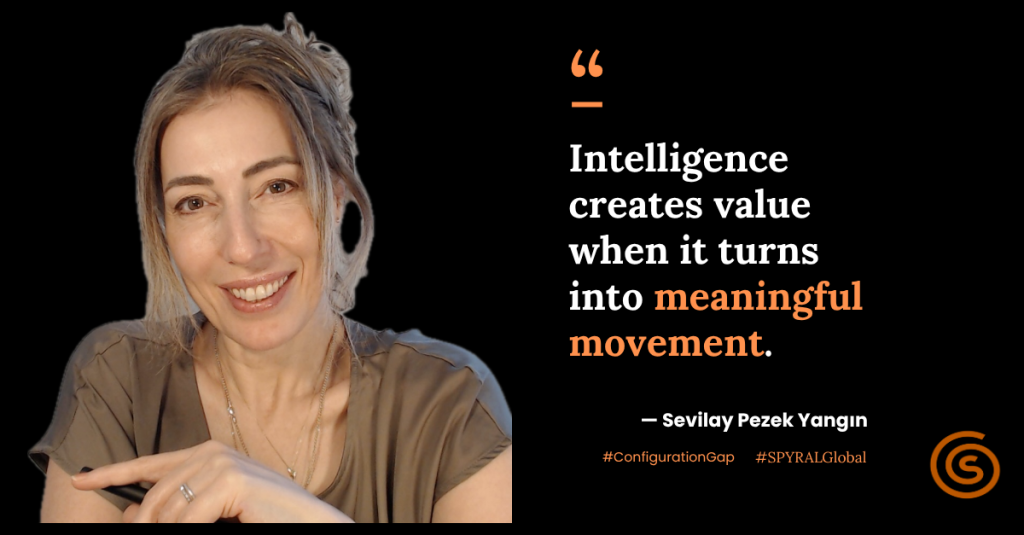
I use Intelligence in Movement for intelligence that, under the right conditions, becomes meaningful and responsible action.
Intelligence Held Back is not inferior intelligence. It is intelligence with real capacity that becomes blocked, fails to contribute, or moves in the wrong direction.
I am not trying to settle whether AI is somehow “truly” intelligent. I am interested in a more practical question: when a system already contains knowledge, judgment, and capability, what determines whether they become useful work, sound decisions, and accountable action?
Organizations have never been short of intelligence. They have often lacked the conditions that allow them to make good use of it.
So the question I keep coming back to is simple:
Is intelligence moving through the system in the right way?
If the capability we need is already there, can it help the right work happen, in the right way, at the right time?
In many organizations, the answer is not always yes. A problem may be noticed but never voiced. It may be raised but not taken seriously. A decision may eventually be made, yet nobody really owns it, so nothing happens. At other times, action follows, but learning does not.
The intelligence exists. The system simply fails to convert it into something useful.
The three monkeys on my desk
Over the years, I often noticed things early, spoke up, and tried to move them toward action.
A colleague once gave me a small porcelain ornament of the three wise monkeys for my desk. One covered its eyes, one its ears and one its mouth. Half-jokingly, the message was:
“If you want to succeed in corporate life, learn to say:
I didn’t see it.
I didn’t hear it.
I don’t know.”
The irony is that the traditional moral associated with the three monkeys is almost the opposite. The image is commonly linked to not looking at evil, not listening to evil, and not speaking evil. In modern usage, however, it often carries another meaning: knowing something and choosing not to see it, hear it or speak about it.
That second meaning is the one that interests me in organizations.
When people learn to stay silent, ignore what they hear or avoid responsibility for what they know, a system may contain a great deal of intelligence without being able to use it.
I adapted the metaphor for my own work. I often told my teams and the leaders I coached:
Do not believe everything you hear.
Believe half of what you see.
And always question.
Since AI entered the picture, I have added one more line:
Now, do not believe what you see either. 😄
Today, AI can generate almost anything. The issue is not simply that there is more content. The real pressure comes from the speed and volume at which that content enters organizational life.
Emails can look polished while saying very little. Reports can be thorough and still go unread. Analyses can be produced faster than people can absorb, challenge or place in context.
And these outputs do not sit quietly in a folder. They circulate. They shape conversations, consume attention, influence decisions, and sometimes become action before anyone has properly interrogated them.
I am an industrial engineer. Much of my professional life has been spent optimizing resources and building sustainable systems that let the right work happen the right way.
That way of thinking has stayed with me, but my focus has gradually shifted toward intelligence and what happens to it inside a system.
I became less interested in the status or the title of the person an idea came from and more interested in whether the idea was reliable, meaningful and useful.
The questions followed naturally: Where is the intelligence? What is getting in its way? What allows it to be used well? What causes it to disappear, stall or move in the wrong direction?
Which led me to another question.
Is intelligence itself enough?
We now have access to far more human and machine capability than before. That is an extraordinary opportunity, but output is growing much faster than our capacity to pay attention, make sense of it and decide well.
I call this AI inflation: an abundance of output that organizations are still learning how to absorb.
More options are not inherently a problem. Neither is more content. The problem begins when truly important signals, information and concerns become harder to distinguish from everything surrounding them.
That is why more output does not automatically make an organization more intelligent.
What matters is whether the system can tell what deserves attention and turn that intelligence into good work.
The Configuration Gap
I call the distance between the intelligence available in a system and what the system actually manages to do with it the Configuration Gap.
More precisely:
The Configuration Gap is the gap between the intelligence available within a system and what that intelligence actually becomes: meaningful contribution, decisions, ownership, action and learning.
AI is making that gap easier to see. More and more machine-generated output enters the organization, but judgment does not necessarily increase at the same rate.
That is why the distinction I find useful isn’t simply human intelligence versus machine intelligence.
It is Intelligence in Movement versus Intelligence Held Back.
Intelligence in Movement is intelligence that, under the right conditions, becomes meaningful and responsible action. It can be human, machine or collective intelligence. It can also emerge from the system they form together.
Intelligence Held Back is not inferior intelligence. It is intelligence with real capacity that becomes blocked, fails to contribute or moves in the wrong direction.
The difference matters because the problem is not always the individual, and it is not always the technology.
Sometimes the problem is the way the system is configured.
If AI can give us an answer, why do we still need human judgment?
A polished answer is not proof of good judgment.
We already know this from everyday life. Think about the terms and conditions we accept when installing software or signing up for a service. Most of us do not read every page. We click “I have read and agree” and move on.
A human was technically involved. Judgment was not necessarily in the process.
The same thing can happen in AI-enabled work.
Someone may approve an impressive-looking report because the system has been reliable before, time is short, the document is long, and accepting something that “looks good enough” requires far less cognitive effort than examining it properly.
A human can be in the loop without judgment being in the loop.
That matters because generative AI is not a deterministic calculator. It produces probabilistic outputs, and its internal workings are not fully transparent to the user. A result can be highly convincing and still be wrong.
Verification therefore becomes more important, not less.
Combining a person with AI does not automatically produce a better outcome.
I recently completed the University of Cambridge course Introduction to Cognitive Psychology and Neuropsychology through edX, and I continue to study these questions.
Two publications in particular caught my attention.
A 2024 systematic review and meta-analysis examined 106 experimental studies and 370 effect sizes. Across the tasks studied, human-AI combinations performed, on average, worse than whichever worked better alone, the human or the AI system. Losses were particularly evident in decision tasks. Creation tasks showed a more positive pattern, although the average synergy effect was not statistically different from zero.
For me, that finding sharpens the questions we should be asking. Can the person genuinely evaluate what the system produces? Do they have the relevant knowledge, enough cognitive space, real decision authority and enough psychological safety to challenge what they see? And, if necessary, can they actually stop or redirect the process?
A 2026 Comment in npj Digital Medicine, written in the context of medical AI, proposes four interlocking conditions for meaningful human oversight:
- Epistemic capacity
- Cognitive space
- Decisional authority
- Intervention effectiveness
I find this distinction useful well beyond the medical context. A person can be present in the process yet lack the knowledge, time, authority or ability to intervene in any meaningful way. At that point, human oversight risks becoming procedural rather than protective.
As AI takes over more production work, the human contribution may therefore shift away from producing more and toward discerning, questioning, interpreting, carrying context, knowing when to stop and taking responsibility.
The human role is changing
The industrial age taught us to think about work in terms of people operating tools and machines.
Much of today’s AI language still reflects that model: learn the tool, learn the prompt, learn the platform.
Those skills matter. I simply do not think they will be enough.
Work is moving beyond “one human + one tool.” People will increasingly work with AI systems, agents, other people and the organization’s own information infrastructure.
That requires something more than tool proficiency.
It requires the ability to build a working relationship with another form of intelligence.
What context does the system need? What authority should it have? Where are the boundaries? What can be delegated, and what should never be delegated? Where do we place control points? When do we trust, when do we question, and when do we stop?
And when a human and an AI system contribute to the same decision, who ultimately owns it?
One of the most important human capabilities ahead may be the ability to work with another intelligence without outsourcing our own judgment.
The role of HR is changing too
This is where I see an important opportunity for Human Resources.
Designing Human + AI work systems cannot belong to HR alone. It requires business leadership, technology, risk, security and legal expertise as well.
But HR can play an important architectural role because this is not simply a question of teaching people how to use AI tools. It is a question of designing the conditions in which humans and machines can work together productively and responsibly.
In other words, one of HR’s emerging roles may be to help design the flow of intelligence through the organization.
That means asking where human, collective and machine intelligence add value, where they need one another, and where they require clear boundaries.
The objective is not to turn people into machine operators. It is to build systems in which different forms of intelligence can complement one another without losing accountability.
Why source still matters
Years of working in diversity and inclusion taught me something I still believe strongly:
The value of an idea should not depend on the status of the person who voices it.
An idea is not automatically right because it comes from the CEO. A new employee, someone closer to the field or someone far from the organizational centre may see something the system has missed.
But that does not make source irrelevant.
Status and source are different things.
Knowing the source helps us judge expertise, reliability, context and how a piece of information should be validated.
In the age of AI, that distinction becomes even more important. We increasingly need to ask not only:
“Who produced this content?”
but also:
“Whose judgment was present in this outcome?”
Responsibility should not be a signature added at the end.
It should be present in the judgment itself.
What if diversity exists, but intelligence still cannot be used?
Diversity alone does not create collective intelligence.
Different people can be present in the room, and the system can still fail to benefit from what they know.
For difference to become collective intelligence, people need to be able to notice, speak, be heard, learn from one another and see their contribution influence what happens next.
That is where psychological safety, employee voice, organizational learning, decision rights and coordination begin to connect.
The Configuration Gap is one way I am trying to look at those relationships as a system rather than as separate issues.
And once again, we arrive at leadership
Leadership was changing long before AI. AI simply makes the shift harder to ignore.
A leader’s job is increasingly less about having every answer and more about recognizing which intelligence is useful where, creating the conditions for it to be used well and knowing when the system needs to be challenged.
I am not particularly worried about AI itself.
What worries me more is a human system that learns to work with AI while forgetting how to question, verify, think independently and remain accountable for its decisions.
Doing is not enough. Neither is simply having intelligence available.
The questions remain:
Where is it going?
How is it being used?
What is it becoming?
Results matter.
So does the path that produced them.
Perhaps that is the question we should be asking now:
How do we connect human, machine and collective intelligence in ways that produce better judgment, responsible action and learning?
Because the issue is no longer how much intelligence we have.
It is what that intelligence becomes in practice.
References
Vaccaro, M., Almaatouq, A., & Malone, T. W. (2024). When combinations of humans and AI are useful: A systematic review and meta-analysis. Nature Human Behaviour, 8, 2293–2303.
https://doi.org/10.1038/s41562-024-02024-1
van de Sande, D., Economou-Zavlanos, N., & van Genderen, M. E. (2026). Meaningful oversight of medical AI beyond human in the loop. npj Digital Medicine, 9, Article 569.
https://doi.org/10.1038/s41746-026-02971-1